
Uttar Pradesh Darshan Summit 2026 in Prayagraj; brainstorming on giving new direction to spiritual and cultural tourism
Prayagraj: With an aim to connect the rich spiritual, cultural and historical heritage of Uttar Pradesh with tourism development, local economy and modern technology, the Development Leaders Alliance (DLA) organised the Uttar Pradesh Darshan Summit 2026 at the North Central Zone Cultural Centre (NCZCC), Prayagraj on Thursday.
Organized in collaboration with Visa Inc. and the PHD Chamber of Commerce and Industry (PHDCCI), the conference focused on the theme “Uttar Pradesh: Where Faith Meets Future.” The conference brought together representatives from the spiritual world, government, industry, education, tourism, culture, and social sectors to explore the possibilities of developing the state into a major global hub for spiritual and cultural tourism.
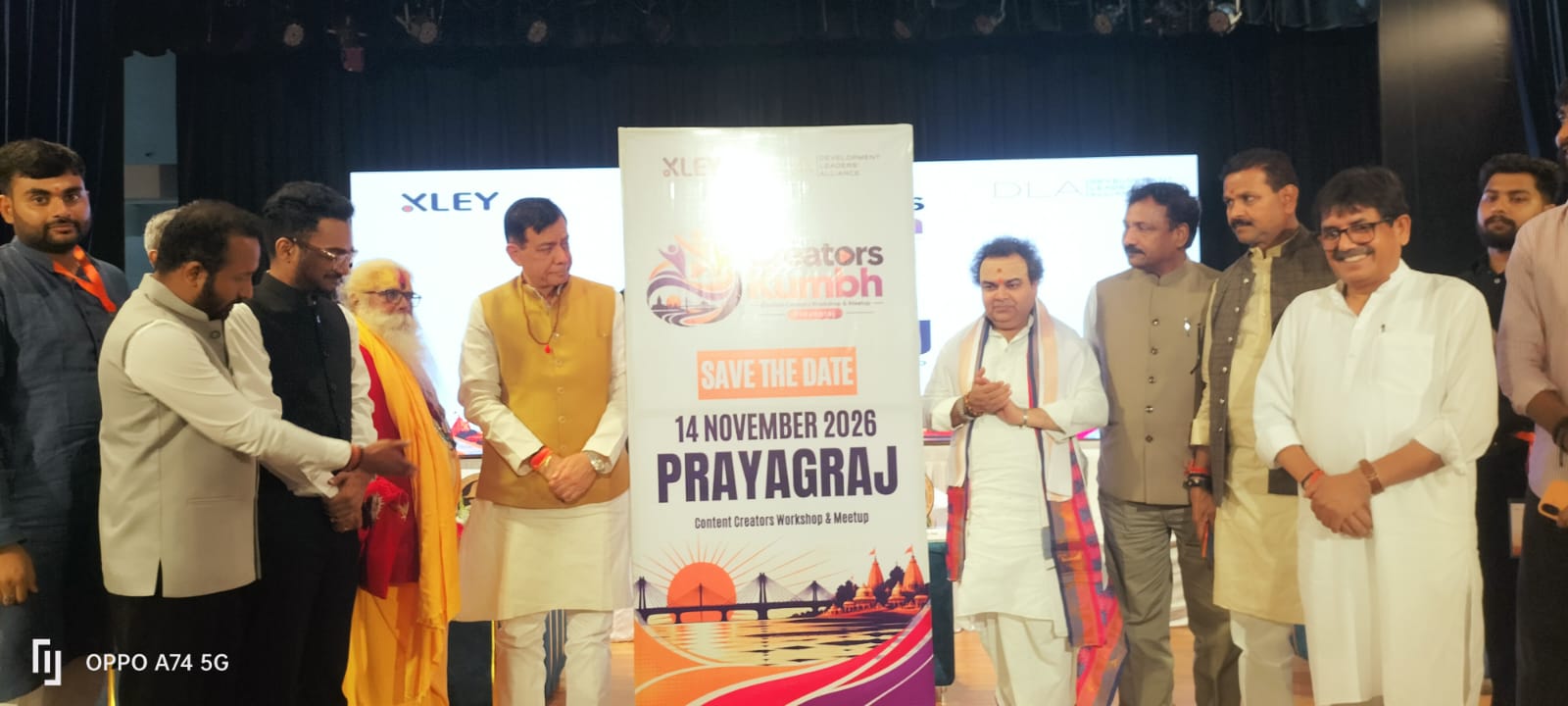
Inaugural session emphasizes spiritual heritage and modern development: The inaugural session of the conference began with the lighting of a lamp on a picture of Mother India and the singing of the national song, Vande Mataram. Honorable Speaker of the Uttar Pradesh Legislative Assembly, Satish Mahana, was the chief guest. The session was attended by numerous dignitaries, including Acharya Shrikant Mishra, District Panchayat President V.K. Singh, Mayor Ganesh Kesarwani, Rahul Kapadia, Dr. Chandradev Mishra, Rajesh Kesarwani, and Kamlesh Mishra.
Chief Guest Shri Satish Mahana described Uttar Pradesh’s spiritual and cultural heritage as the state’s unique identity and a vital force for development. He emphasized the need to simultaneously advance the expansion of tourism facilities, employment generation for youth, and the preservation of cultural values. He said that our pilgrimage sites are not just places of worship, but the foundation of our cultural economy and our consciousness. He added that those who see India and our Sanskrit values, who believe in goodwill, see the essence of this culture. He added that conspirators continue to attack our culture. He added that the threat lies not in them but in those virtuous people who remain silent. He further stated that our Indian culture is a culture that guides humanity, is full of values, and strengthens the will. He emphasized that our land is the land of sages, saints, and great men, whose only goal in life is: May your glory live forever, Mother, whether we live for a few days or not.
Keynote speaker Acharya Shrikant Mishra underscored the importance of preserving the religious traditions and original identity of pilgrimage sites. He emphasized the need to develop spiritual tourism while respecting ancient traditions and religious values while also ensuring the convenience of pilgrims.
Guest of Honor V.K. Singh, District Panchayat President, Prayagraj, highlighted the tourism potential in rural areas and the importance of local community participation. He emphasized the need to improve infrastructure, connectivity, and local employment opportunities in villages connected to pilgrimage sites.
Rahul Kapadia, representing Visa, highlighted the growing role of digital payments, technological innovation, and convenient traveler experiences in the tourism sector. He highlighted the potential for connecting local merchants and small enterprises to the tourism economy through modern payment systems and digital facilities.
Dr. Chandradev Mishra of Sachcha Baba Ashram discussed the social, cultural, and humanitarian significance of pilgrimage in the Indian spiritual tradition. He emphasized the need to prioritize environmental protection, service, and social responsibility alongside the expansion of spiritual tourism. Sankalp Shukla, coordinator of the programme, said, faith has to be made the power of local prosperity and nation building.
Sankalp Shukla, Founder of Development Leaders Alliance, while introducing the Darshan initiative, said that India’s spiritual and cultural heritage is not only a symbol of its glorious past, but also a strong foundation for future economic and social development.
“Our aim is not only to increase the number of tourists to pilgrimage sites, but also to ensure that tourism provides economic opportunities to local youth, women, artisans, small traders and surrounding villages. The benefits of economic activities generated by faith should reach the last person in society.”
Sankalp Shukla further stated that there is immense potential to connect Prayagraj, Kashi, Ayodhya, Mathura, and other religious and cultural centers of the state with a comprehensive tourism system. This requires equal emphasis on improved infrastructure, skilled human resources, modern technology, environmental protection, and institutional coordination.
He explained that the DARSHAN initiative aims to transform dialogue into concrete policy recommendations, institutional support, and implementation on the ground. The experiences gained from dialogues held in various states are being incorporated into a comprehensive national vision, so that India can achieve a leading position in global tourism by 2047, based on its spiritual and cultural heritage. Professor Ranjana Tripathi moderated the program. Present on the occasion were Acharya Kamlesh, Dr. Mrityunjay Rao, Rashmi Tripathi, Rajesh Kesarwani, Dattatreya Pandey, Pandit Rajesh Sharma, Shashank Shekhar Pandey, Ajay Agrahari, and others.


