
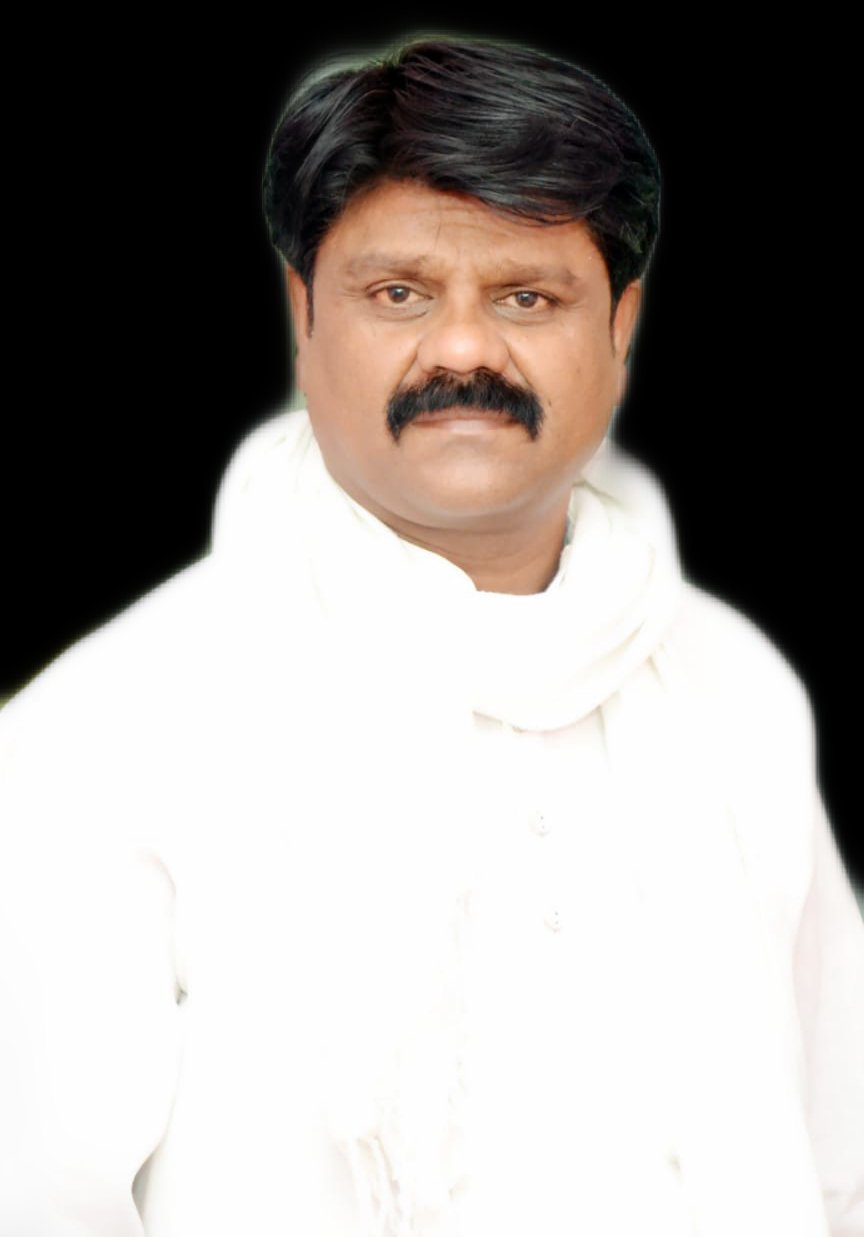
Hope Apex Court will reverse ruling: Arshad Ali
Prayagraj: Minority Affairs City President Arshad Ali stated that the Madhya Pradesh High Court’s decision to declare the Bhojshala-Kamal Maula Mosque a temple is more of a political decision than a judicial one. The High Court failed to address the Muslim side’s concerns about the alleged ASI report. Furthermore, the Places of Worship Act, 1991, was also violated in this case. He expressed hope that the Supreme Court will overturn the High Court’s decision. Arshad Ali stated in a press release that the Places of Worship Act clearly states that the character of religious places as they existed before August 15, 1947, will remain unchanged. Any representation or appeal challenging this will not be entertained before any court, tribunal, or authority.
Arshad Ali said that this decision of the Indore High Court is also in contempt of the order of the then Chief Justice Sanjiv Khanna, Justice Sanjay Kumar and Justice KV Vishwanathan dated December 12, 2024, in which they had prohibited the courts from accepting any petition on the claims of mosques and temples, and from issuing any order in pending cases.
The Congress leader said it was surprising that lower courts were violating Supreme Court orders while the Supreme Court remained silent on the contempt. This proved that such decisions were being passed to serve the political interests of the ruling clique.
The Congress leader said that the most surprising fact is that the Maulana Kamaluddin Welfare Society had objected to the alleged ASI report, stating that the ASI had written the Kamal Maula Mosque-Bhojshala Temple as “Bhojshala Temple” everywhere in its report. This language of the report already casts doubt on its impartiality. Surprisingly, the court took no cognizance of this.
The ASI was also accused of not providing the mosque side with color photographs of the excavation, and the videos it provided were too short. The mosque side had repeatedly requested these. No satisfactory answer was provided to the mosque side’s lawyers’ argument as to why the ASI, contrary to Supreme Court instructions, conducted physical excavations that altered the structure’s shape and appearance. The court also ignored the mosque side’s argument that plastic bottles, paper cups, and other plastic items, all in such a clean state, could be found beneath a slab during excavation. These items could not date back to the 13th or 14th centuries, the period claimed to have been built.
City council president Arshad Ali said the High Court did not respond to the mosque side’s claim that despite its instructions, carbon dating was not used in the excavations. And why did the ASI not cite the Gautam Buddha statue found during the survey in its final report?
The Congress leader said that the reason the Madhya Pradesh High Court’s decision was more political than judicial is that the mosque side had not even requested land to build a mosque elsewhere, but the High Court directed them to request land from the government to build a mosque elsewhere. He said that in this case, the High Court did the same thing as the Supreme Court did in the Babri Masjid case. D.Y. Chandrachud, a member of that bench and later, unfortunately, Chief Justice, admitted in an interview that he had based his decision on faith rather than facts.


