
Prayagraj: Congenital spinal cord defects are quite uncommon in young children. These are called neural tube defects or spinal dysraphisms. There are several types. When the fetus develops a defect in the mother’s womb, the normal development of the spinal cord and nerves is disrupted. One of these disorders is called split cord malformation. This is a very rare condition. In this condition, the spinal cord grows backward, dividing the spinal nerves/spinal cord into two parts, resulting in decreased leg strength and impaired bowel control. This condition affects approximately one in 5,000 newborns (0.02%).
In this condition, the baby is born with a large protrusion in the spine. An MRI scan is necessary to thoroughly study the anatomy of the spine and determine the surgical strategy. This is a very complex surgery, as it involves removing the bone between the spinal cord while protecting the spinal nerves and then reconstructing a natural spinal cord. A 3-year-old girl from a family in Mirzapur had a similar problem and had undergone surgery once in her childhood.
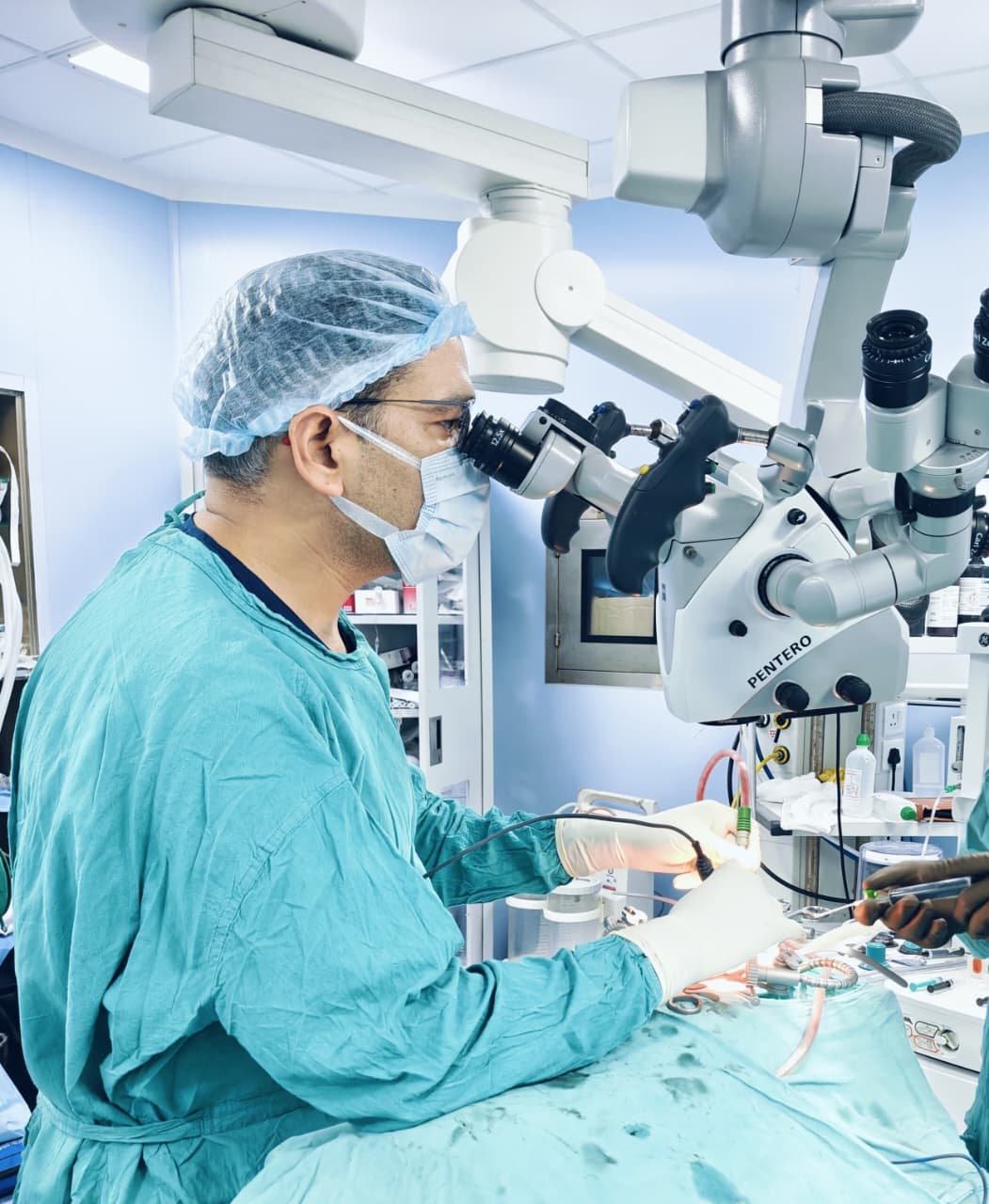
An MRI revealed her spinal cord was split in two due to an overgrowth of a bone, and the girl also had weakness in her legs. Dr. Pankaj Gupta, head of the neurosurgery department at Swaroop Rani Hospital, successfully operated on the girl, giving her a new lease on life.
Dr. Gupta explained the case, stating that such a complex operation requires extreme care. First, the middle bone was carefully removed with a microdrill, and then the divided nerves were reconstructed in the middle, creating a single spinal cord. The spinal cord was also reconstructed above the nerves using the patient’s remaining bones.
The operation was a complete success, and the girl was discharged after six days. The girl’s family thanked the Department of Neurosurgery, Principal Dr. V.K. Pandey, Vice Principal Dr. Mohit Jain, and Special Incharge Dr. Neelam Singh. Previously, patients had to travel to Delhi, Mumbai, or Lucknow for such complex operations, and this cost a fortune. However, with the availability of modern machinery, these operations are now routinely performed at the PMSSY building at a nominal cost. Dr. Pankaj Gupta attributed this to the foresight of the central and state governments.


